Oilfield Waste
Waste Oil, Filters, Plastics and Glycol: Getting Collection Right
What an approved collector will and will not take, why mixing streams is the expensive mistake, and how to set up a lease so collection is straightforward.

Tank types, how containment is sized and built, and the walk-around inspection that catches the problems that turn into reportable releases.
 By Dale Whitcombe · Field Operations Writer & Founding Editor
· Published
· Last updated
· 4 min read
By Dale Whitcombe · Field Operations Writer & Founding Editor
· Published
· Last updated
· 4 min read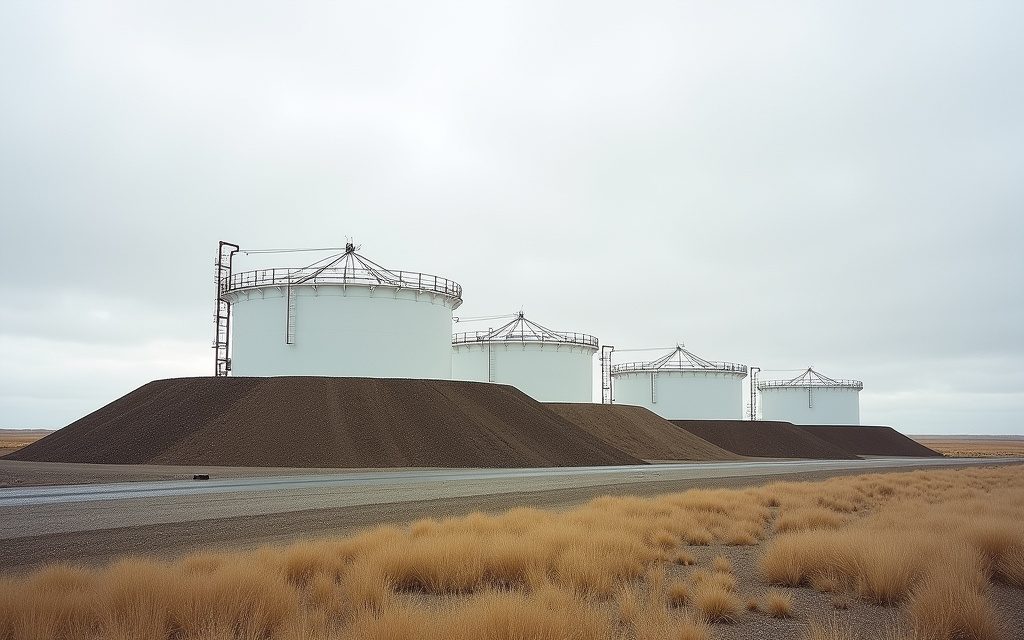
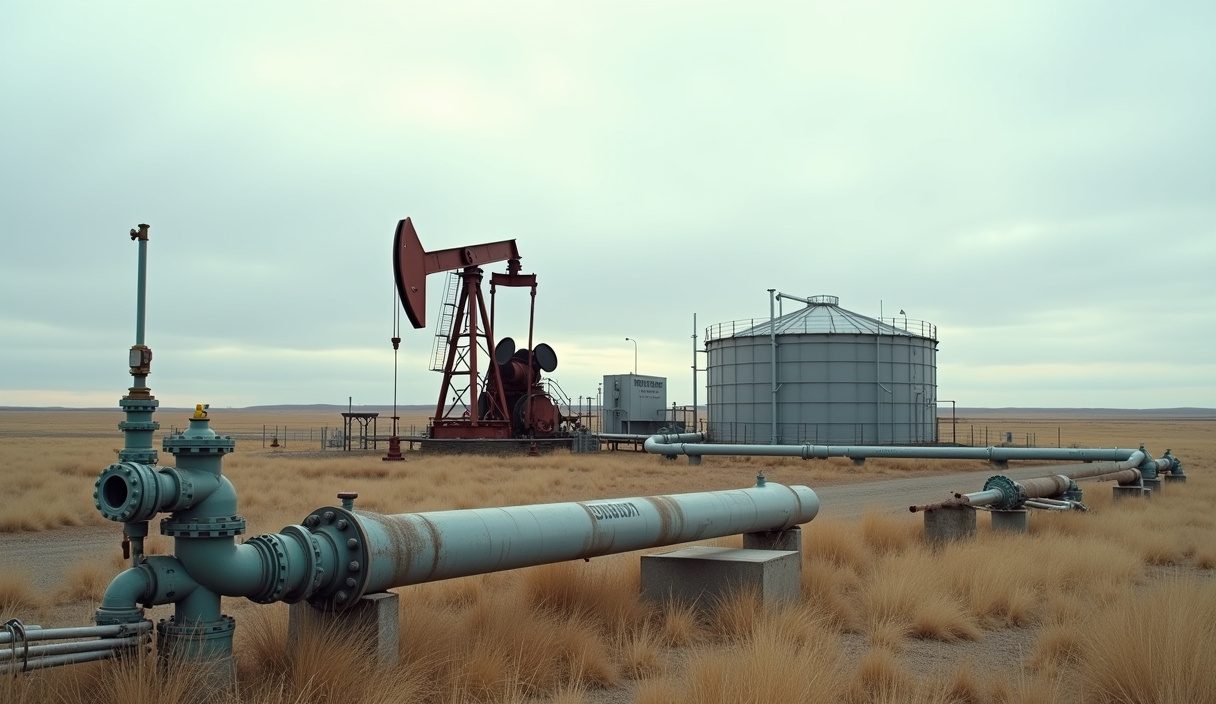
Storage is where fluid waits, and waiting is when things leak. Most reportable releases on producing properties do not come from dramatic failures; they come from a corroded tank bottom, a valve left cracked open, a flowline connection that has been weeping for weeks, or a containment berm that quietly stopped being able to hold anything.
This guide covers the storage side of the operation and, more importantly, the containment around it.
Steel bolted or welded tanks are the traditional production tank: robust, repairable, and vulnerable to internal corrosion where they hold brine. Internal coating extends life considerably and its condition is worth knowing.
Fibreglass tanks resist corrosion very well, which makes them attractive for produced water service. They are less tolerant of impact and of UV over long periods, and repairs are a more specialised job.
Poly tanks and totes serve smaller volumes and chemical storage. They are cheap and easy to place, which is exactly why they end up sitting on bare gravel without containment.
Above-ground storage in a tank farm for larger facilities, with the containment sized for the whole battery rather than per tank.
Primary containment is the tank. Secondary containment is what catches the contents when the tank fails, and it exists because tanks do fail.
The standard approach in this region is an earthen berm around the tank area with an impermeable liner, sized to hold a meaningful proportion of the stored volume plus an allowance for precipitation. The specifics of sizing and construction are set by the applicable requirements and by the fluid stored, so check the current directive rather than working from a rule of thumb someone told you.
The two things that quietly defeat containment are both mundane. The first is accumulated water: a berm half full of rainwater and snowmelt has half the capacity it was designed for. The second is berm and liner degradation: erosion after heavy rain, frost heave, rodent burrows, vehicle tracks cut through the berm for convenience, and liner damage at the anchor trench.
Most of what matters is visible to someone who walks the site properly. A useful routine:
Write it down each time, with the date. A contemporaneous record showing a regular inspection routine is worth a great deal if something does go wrong, and the trend across inspections is what tells you a problem is developing rather than static.
Southern Alberta winters create their own failure modes. Frost heave moves berms and cracks liners. Snow accumulation inside containment melts into capacity you were counting on. Frozen valves and vents cause problems on the first warm day. Ice in a containment area hides what is underneath it, so a walk-around in February tells you less than one in June, and inspection frequency should account for that rather than pretending otherwise.
Sizing is set by the applicable requirements and depends on what is stored and the configuration. Get it from the current directive or from a qualified professional rather than from a remembered percentage. Whatever the figure, remember that accumulated precipitation eats into it.
Only if you know it is uncontaminated, and the burden of knowing is on you. Water that has sat in a containment area around produced water tanks should be treated as potentially contaminated until you have reason to think otherwise. Many operators handle it as produced water, which is the conservative and usually correct choice.
Yes. A chemical tote holding a few hundred litres on bare gravel is a release waiting to happen, and the fact that it is small does not change the obligation or the remediation cost. Portable containment trays are inexpensive.
Stop the source if it is safe to do so, contain it, and report it in accordance with the applicable requirements. Report promptly rather than waiting until you have characterised the full extent. Document what you found, when, and what you did.
That depends on service, construction and the applicable requirements. Brine service is harder on steel than oil service. If you do not know when a tank was last inspected internally, that is itself worth addressing.
What an approved collector will and will not take, why mixing streams is the expensive mistake, and how to set up a lease so collection is straightforward.
Approval class, what they will actually accept, turnaround, how rejections are handled, and the documentation you should expect back with every load.
Where the water comes up from, what is dissolved in it, and the specific reasons it cannot be put on the ground or into a creek.