Oilfield Waste
Waste Oil, Filters, Plastics and Glycol: Getting Collection Right
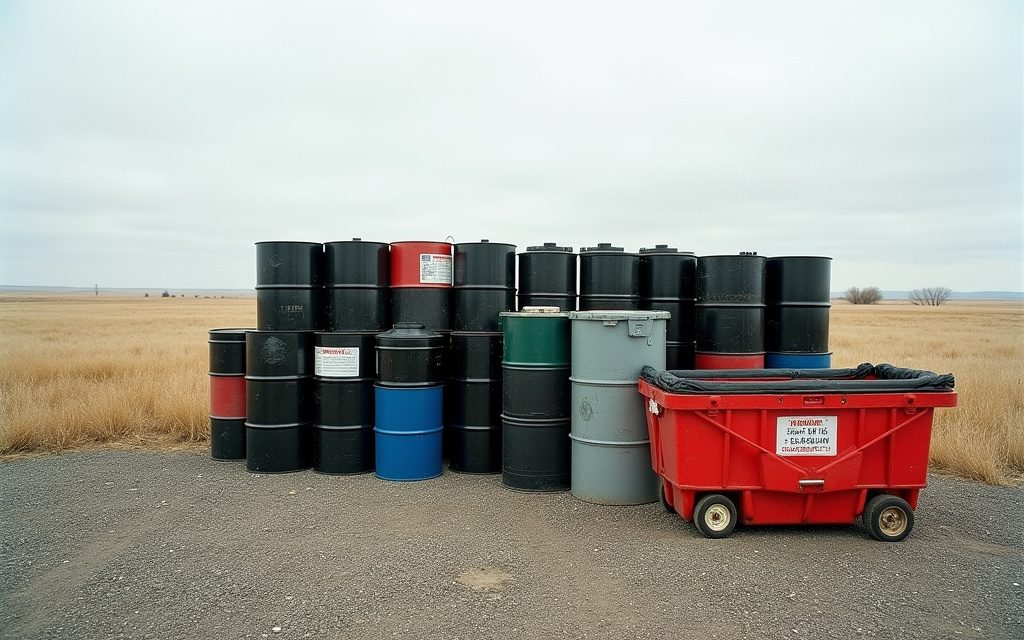
What an approved collector will and will not take, why mixing streams is the expensive mistake, and how to set up a lease so collection is straightforward.

Approval class, what they will actually accept, turnaround, how rejections are handled, and the documentation you should expect back with every load.
Picking a disposal facility on price alone is how operators end up with rejected loads, surprise charges and a compliance file they would rather not have. Price matters, but it is one line in a longer list, and the cheap facility that rejects a load every second week is not cheap.
This is the checklist to work through before the first load goes anywhere.
Ask what the facility is approved for, and ask to see it. You want to know the class of the disposal well and what the facility approval permits it to receive. If what you are sending falls outside that, nothing else on this list matters. Our class guide explains the distinctions.
A facility that is vague about its approval, or that suggests it can take something it is not obviously licensed for, is a facility to walk away from. The generator's obligation to use an approved receiver does not disappear because someone at the gate said it would be fine.
Approval sets the outer boundary; operational limits sit inside it. Ask specifically about:
Trucking usually dominates the total cost, so a facility with a higher per-cubic-metre fee twenty kilometres away frequently beats a cheaper one eighty kilometres out. Work out the delivered cost rather than comparing gate fees.
Also consider road access: a facility on a route that becomes difficult in spring breakup or after heavy snow has a hidden cost in the weeks when you most need it to be available.
A facility that is open when your trucks run is worth more than one that is not. Ask about hours, whether they take loads outside them, and what the typical wait at the unloading bay looks like at busy times. Truck time waiting in a queue is money.
This is the question most people forget and the one that matters most when something goes wrong. Ask:
A facility that will hold a questionable load, test it and tell you precisely what the problem was is worth paying slightly more for, because you can then fix the upstream cause. One that simply turns trucks away leaves you with a loaded vacuum truck and no information.
Ask how volumes are measured and how loads are sampled. You want a facility whose measurement you can rely on, because that number is the basis of both your invoice and your reporting. Ask whether you can get a sample split if you dispute a characterisation.
You should receive documentation for every load confirming what was delivered, the volume, the date and the receiving facility. That record is part of your obligation as a generator, not an administrative nicety. Establish how it will reach you — per load, or a batch at month end — and check that it actually arrives.
Ask for the whole structure, not a headline number:
The recovered oil credit is worth asking about specifically. On a stream carrying appreciable oil it can materially change the net cost, and practice varies between facilities.
Ask about capacity headroom and whether they have turned volume away recently. A facility running at its limit is one workover away from not being able to take your loads. It is also worth having a second facility identified and, ideally, already set up with, so that a shutdown does not stop your production.
Ask other operators in the area. The useful questions are about behaviour under stress rather than on a normal Tuesday: how do they handle a disputed load, do they communicate when they have a problem, are invoices accurate, do they give notice before changing what they accept?
If your volumes justify it, yes. Redundancy protects you against a shutdown, and having an alternative gives you a position in a pricing conversation. The overhead is the setup and account paperwork at the second facility.
Usually but not always. It stops being the right answer if it cannot take your stream, if its turnaround is poor, or if its approval does not cover what you send. Delivered cost with the load actually accepted is the thing to compare.
Tell the facility before you send it. A changed stream sent without notice is how a good relationship turns into a rejected load and a characterisation dispute. Most facilities are accommodating about a change discussed in advance and unimpressed by one discovered at the gate.
Often, particularly with consistent volume, clean well-characterised loads and predictable scheduling. Facilities value customers who do not create problems, and that is worth saying out loud in the conversation.
What an approved collector will and will not take, why mixing streams is the expensive mistake, and how to set up a lease so collection is straightforward.
Tank types, how containment is sized and built, and the walk-around inspection that catches the problems that turn into reportable releases.
Where the water comes up from, what is dissolved in it, and the specific reasons it cannot be put on the ground or into a creek.